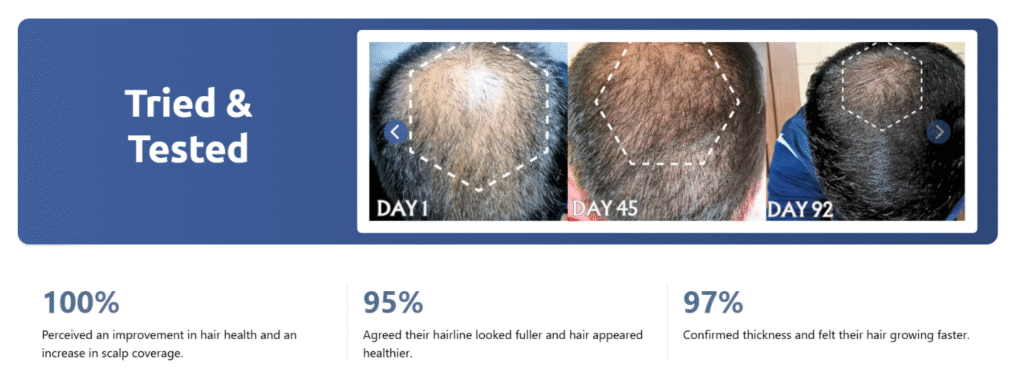
The human scalp has over 100,000 hair follicles, with 90% in the growth (anagen) phase and 10% in the resting (telogen) phase. Shedding more than 100 hairs daily may indicate Telogen effluvium (TE).
TE is a common, non-scarring hair loss caused by triggers like stress, illness (Covid , Typhoid, Dengue, Accidents), or medications. It leads to excessive hair shedding and reduced volume. Acute TE lasts under six months, while chronic TE persists longer .
Clinical Features: Recognizing Telogen Effluvium
Excessive Hair Shedding
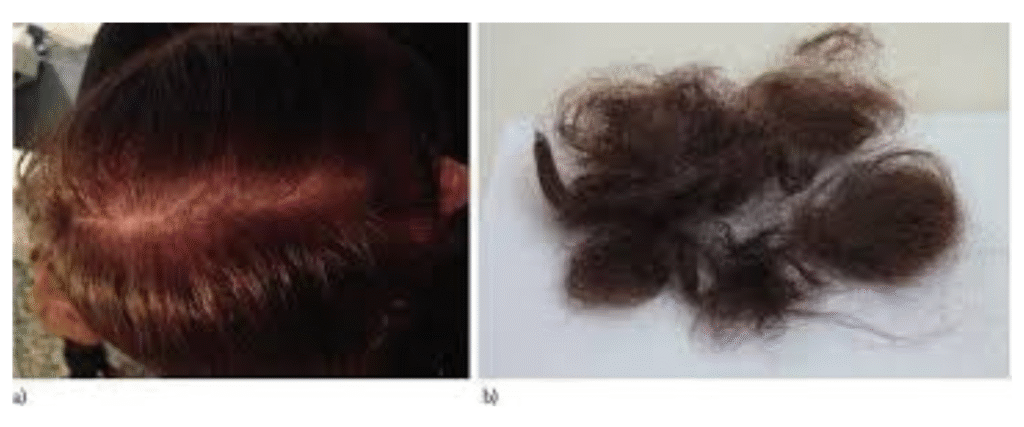
Patients with TE often report sudden and heavy hair loss, sometimes collecting shed hairs (a “Bag Sign”) to show the extent. Severe cases, involving over 25% hair loss, result in noticeable thinning, such as reduced ponytail volume, mostly hair are lost with the hair bulb attached.
Examination Finding
Hair analysis shows thinner, weaker hairs with many in the telogen phase with white roots.
Key Triggers
Common causes include
stress, illness, nutritional deficits, thyroid dysfunction, and medication side effects.
Acute TE
Hair loss begins 2-3 months after a trigger and lasts 4-8 weeks.
Chronic TE
CTE lasts over 6 months and predominantly affects women aged 30-60. The hair loss
is abrupt but does not lead to complete baldness. The course often fluctuates, with
improvement after addressing triggers.
Investigations: Diagnosing TE
Clinical Tests
Hair Pull Test
Trichogram: Shows >25% telogen hairs, identified by their club-shaped, non-pigmented roots.
Trichoscopy: Helps rule out other conditions like androgenetic alopecia, revealing unique signs like
ollicular miniaturization.
Blood Tests
Thyroid dysfunction (TSH, T3, T4)
Nutritional deficiencies (iron, zinc, vitamin D)
Hormonal imbalances, especially in women
Other Tests
Scalp biopsy (rarely needed)
Blood counts and organ function tests to identify systemic causes
Treatment: Managing Telogen Effluvium
Address the Cause
Identify and eliminate triggers such as stress, illness, or nutritional deficiencies.
Iron supplements for ferritin <70 mg/ml
Thyroid hormone therapy if dysfunction is present
Medications
Minoxidil: A 2%-5% topical solution applied twice daily to stimulate regrowth, especially in chronic or drug-induced TE.
Supportive Care
Balanced nutrition and stress management aid recovery.
Monitor progress regularly for adjustments in treatment.
Differential Diagnoses
Androgenetic Alopecia: Gradual thinning, unlike the abrupt shedding in TE.
Diffuse Alopecia Areata: Autoimmune cause with patchy hair loss.
Anagen Effluvium: Sudden loss during the growth phase, often from chemotherapy.
By identifying triggers and providing timely interventions, TE is usually reversible,
restoring hair volume and confidence.